

Autumn driving: the top 5 mistakes drivers make in the dark and how to avoid them
25.09.2026
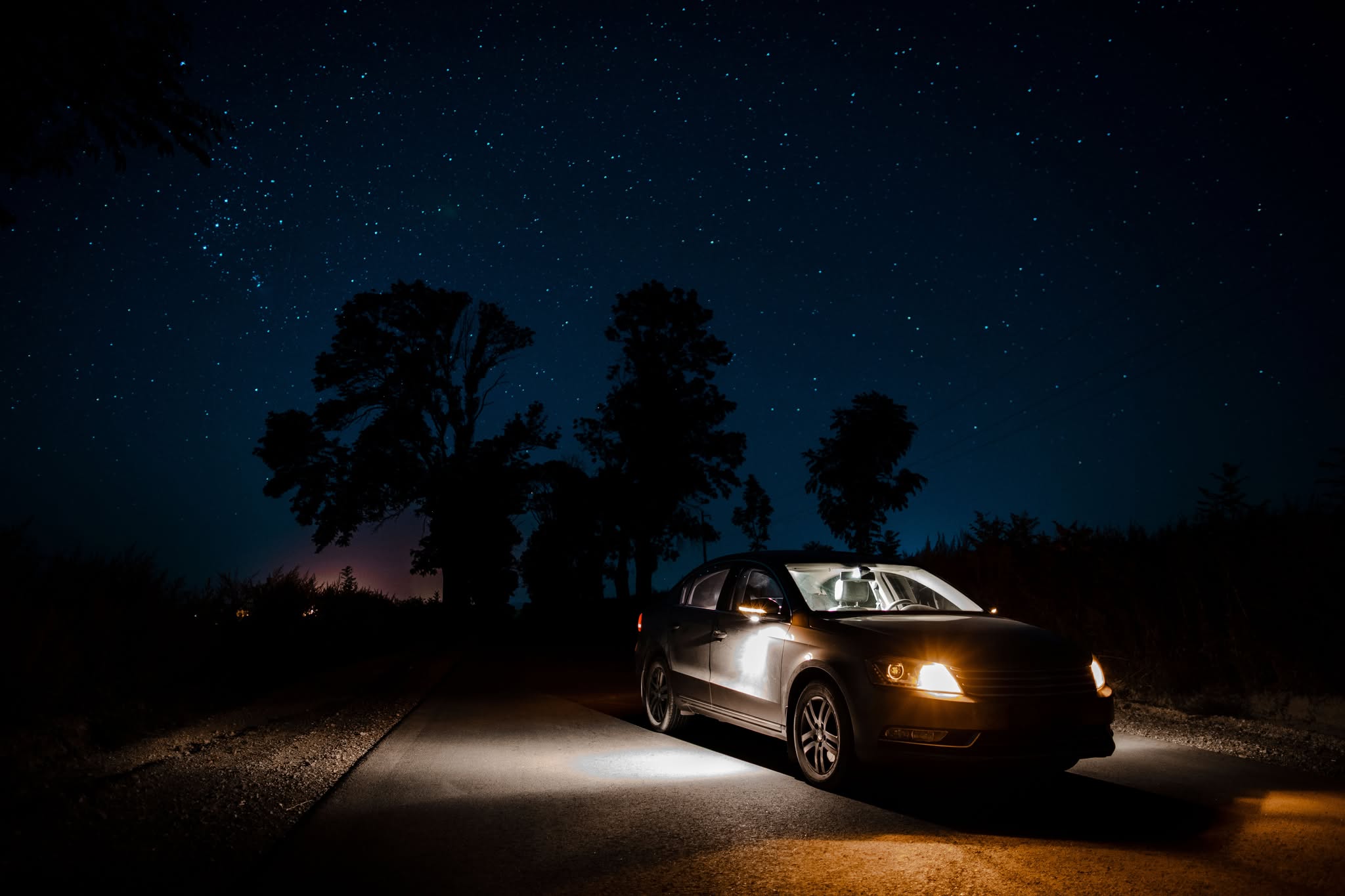
Early dusk and unlit streets turn autumn journeys into a real stress test. How can you adjust your car and your own habits to drive safely in the dark and avoid potential hazards? Read all about it in our blog.
As the season changes, road conditions become significantly more challenging: the driver’s eyes are forced to adapt quickly to the lack of light each time, and the overall reduction in visibility directly affects reaction times and distance judgement. At night, the range of standard headlights is very limited — around 50–100 metres. This is sufficient on well-lit avenues, but on unlit stretches of road, it is critically insufficient. To make your journeys safer, we’ve compiled a list of the five most common mistakes drivers make after sunset, along with practical tips on how to avoid them.
Mistake No. 1: Dirty windscreen and blind faith in the ‘factory settings’ of your headlights. Many drivers go for years without checking the angle of their headlights. As a result, you may mercilessly blind oncoming traffic, or your headlights may simply shine ‘at the ground’, drastically reducing your field of vision. Add to this dirt on the windscreen or mirrors, which scatters light and creates dangerous glare. As autumn begins, be sure to visit a service centre to have your headlights adjusted. And before every evening drive, wipe down your headlights and mirrors — this simple habit can improve visibility by 30–40 per cent.
Mistake No. 2: ‘light pollution’ inside the cabin. A bright instrument panel, a multimedia screen set to maximum brightness, or a smartphone in a holder right in front of your eyes — these are the worst enemies of night-time driving. The human eye always adapts to the brightest light source. If the cabin is bright, your pupils constrict, and you’ll find it much harder to see the dark road ahead. Be sure to dim the screen backlights. Also, don’t forget to regularly wipe the inside of the windscreen, as a subtle layer of dust significantly increases glare from oncoming headlights.
Mistake No. 3: wearing the wrong glasses or not wearing any at all. If you wear prescription glasses without a special anti-glare (light-enhancing) coating, they will catch the glare at night and blind you even more. For driving in the dark, you should choose special glasses with polarised (often yellow) lenses, which improve contrast. However, be careful: such lenses may slightly reduce the overall amount of light reaching your eyes, so only buy them after consulting an optician.
Mistake No. 4: ‘light shock’ syndrome on the motorway. After being dazzled by the high beams of an oncoming car, normal vision takes up to 30 seconds to return. At a speed of 90 km/h, a car travelling ‘blind’ covers hundreds of metres during this time. The Highway Code requires you to switch from full beam to dipped beam at least 250 metres before an oncoming vehicle, but experts advise doing so even earlier — 300 metres beforehand. If you are being dazzled, under no circumstances should you look directly at the headlights. Shift your gaze slightly to the right, using the white kerb line as a guide.
Mistake No. 5: ignoring ‘blind spots’ and ‘invisible’ pedestrians. In the dark, our brain is much less able to judge the distance and speed of objects. Pedestrians wearing dark clothing without reflectors blend into the road and only become visible a few dozen metres away, by which time it is already too late to brake. Therefore, when approaching unregulated crossings, bus stops or simply driving along unlit streets, take the precaution of slowing down — even if it seems to you that there is no one ahead.
Frequently asked questions: debunking myths about night-time driving
As well as common mistakes, driving in the dark is often accompanied by driving myths and debates. We’ve selected three frequently asked questions to set the record straight.
- Is it OK to switch on your fog lights at night to make it brighter (even if there’s no fog)? Absolutely not. Fog lights are only permitted in conditions of poor visibility (fog, heavy rain, snowfall). On a normal clear, albeit dark, night, they dazzle other drivers. If you’re driving on an unlit road, they may only be used in conjunction with dipped or full-beam headlights, and not as a standalone light source.
- If you start to feel sleepy in the dark, is it enough to drink a strong coffee or turn up the music to make the tiredness go away? No, that’s an illusion. Coffee or an energy drink will give you a brief burst of energy, but they won’t solve the problem. Eye strain at night isn’t simply down to a lack of sleep, but a physiological reaction to constant stress caused by fluctuations in light levels (darkness all around and bright oncoming headlights). The brain quickly becomes overloaded, and the risk of imperceptibly drifting off into a ‘microsleep’ rises sharply. The only safe solution is to pull over in a safe spot, air out the car, stretch your legs and let your eyes rest for at least 15–20 minutes.
- Is it safe to switch on the interior light whilst driving to find something? No. Switching on the interior light at night instantly turns your windscreen into a mirror. Instead of the road ahead, you’ll see your own reflection and the car’s interior. If you need to find something urgently, pull over safely to the hard shoulder.
Driving in autumn and winter demands our full concentration. Darkness, eye strain and the unpredictable behaviour of other road users are factors that cannot be controlled one hundred per cent.
However, you can always ensure your financial protection. With a reliable motor insurance policy from Euroins, you’ll enjoy genuine peace of mind on the road. And to avoid straining your budget ahead of the challenging winter season, take out your policy online and make use of the convenient instalment payment option.