

Melted asphalt: how not to fall victim to spring potholes
04.03.2026
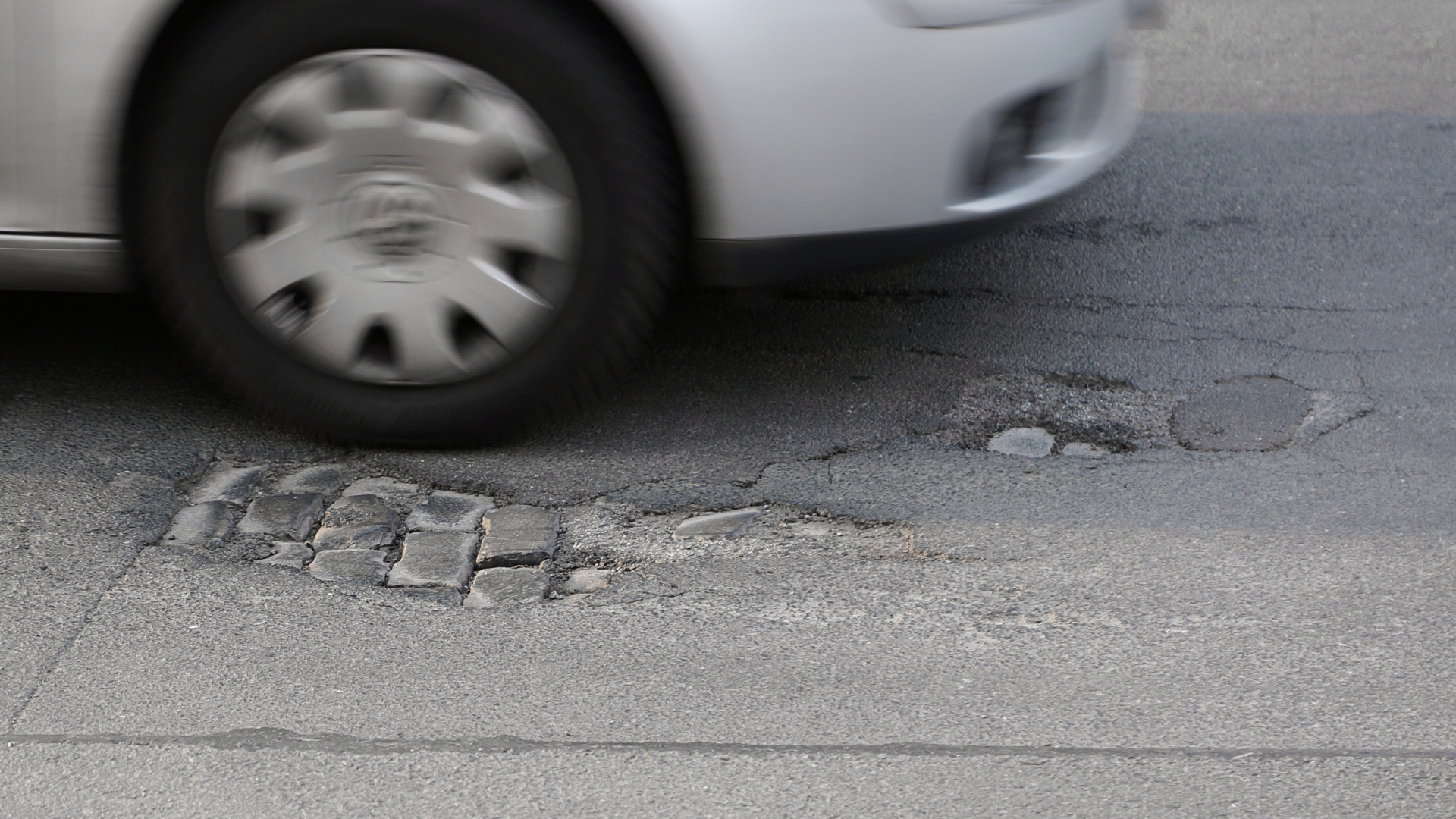
"Along with the snow, the asphalt has melted" – this is the harsh reality of our roads. That is why March is always a test for both drivers' nerves and the durability of their cars.
Spring potholes appear suddenly, as if out of nowhere, and are often disguised as innocent puddles or snow remnants. For car owners, it's a real game of roulette, where the price of a mistake is at least a ruined mood, and in the worst cases, serious damage or even an accident. When a car hits a hidden trap at speed, the consequences can be extremely devastating.
The most common risks and consequences of hitting a pothole
The first to be affected are the tyres and rims: the sidewall of the tyre is simply clamped between the sharp edge of the pothole and the rigid rim, resulting in side cuts or punctures that are impossible to repair. The wheel rims themselves, especially the currently popular alloy models, are easily dented or cracked by such contact.
However, the greatest risks are often hidden deeper. A strong impact is instantly transmitted to the suspension and steering, causing levers to bend, joints to crumble, and in the worst-case scenario, the wheel may even come off while driving. This automatically leads to a sudden loss of control of the car. At that moment, the car can suddenly swerve in the middle of the road, creating an emergency situation not only for you but also for everyone around you. That is why it is important to understand not only the mechanics of damage but also how our brain and instincts work in a critical moment.
How to react to a pothole
The first rule of survival on spring roads concerns your gaze. It sounds paradoxical, but when you notice a pothole, you should not focus your attention on it. Our brain is designed in such a way that our hands instinctively steer the wheel in the direction we are looking. If you stare at a pothole, you will definitely drive into it. Instead, train yourself to look where there are no obstacles, or "aim" your gaze far beyond the pothole if you plan to drive between its wheels. This helps you maintain your trajectory and avoid jerking the steering wheel at the last moment.
The second critical moment is braking. Most drivers panic and press the brake pedal to the floor, which is a fatal mistake. It is better to brake in advance on a straight section and release the pedal a few metres before the pothole itself. Why is this important? When you press the brakes, the weight of the car is transferred forward by inertia, compressing the front suspension springs as much as possible. If an impact occurs at this moment, the compressed suspension will not be able to absorb it, which is guaranteed to lead to damage to parts or a burst tyre. By releasing the brakes just before the pothole, you unload the front axle, the springs uncompress, and the car "jumps" over the obstacle much more easily with minimal damage.
Tips for more experienced drivers
Experienced drivers often try to drive around a pothole at the last second by making a sharp manoeuvre. But this is where another pitfall lies – the risk of veering into the adjacent lane or oncoming traffic. When you turn the steering wheel in a panic, there is no time to adequately assess the situation in the mirrors. Therefore, it is better to take the impact of the pothole with straight wheels than to collide with another car. In addition, it is absolutely impossible to drive into a pothole with turned wheels – this creates a destructive lateral load on the suspension, the consequences of which will be much worse than in a direct collision.
If the road has turned into a solid sieve, the only way out is to reduce your speed as much as possible and choose a trajectory through the shallowest potholes. Experienced drivers sometimes use a "counter-steering" technique: for example, if there is a pothole under the right wheel, they turn the steering wheel sharply to the left and then back to the right to momentarily unload the right side of the car and allow the wheel to pass over the obstacle more easily.
Be especially careful around puddles. Water is the best cover for deep potholes in the asphalt. If you cannot avoid a puddle, drive through it slowly. Pressing the accelerator in water can cause aquaplaning, when the wheels literally float and you lose all contact with the road. Also, do not try to copy local "racers" who confidently speed along broken roads. You do not know how strong their suspension is, whether they have special reinforced tyres installed, or whether they simply do not care about their iron horse. Every car reacts to impacts in its own way, and it is not worth risking your safety.
How to check your car after hitting a pothole
Even if, after the impact, you think that everything is fine, do not ignore the "warning signs" that the car gives later. Listen to the steering wheel: if there is a knocking sound when turning or you feel unusual free play (backlash), this may be a sign of serious problems with the steering rack. Also, pay attention to how the car handles on the road. If the car starts to pull to one side on a flat surface, this is a direct symptom of disturbed suspension geometry or hidden wheel damage. In this case, do not delay visiting a service station to check the wheel alignment and perform a general inspection of the chassis.
Of course, we cannot patch all the potholes on your way, but we can protect you from the financial consequences of mistakes on the road that lead to serious accidents. Spring is the time when a car insurance (CASCO) policy from Euroins becomes a must-have for car owners, a reliable tool for peace of mind. Take care of yourself, hold the steering wheel firmly and remember: sometimes it is better to drive slower but remain confident in every kilometre ahead.